| Operator | What it finds | Example |
|---|---|---|
from: | Posts by one account | from:yourname |
to: | Replies sent to an account | to:yourname |
"phrase" | The words in that order | "build in public" |
OR | Either word, written in capitals | (rust OR golang) |
-word | Leaves a word out | launch -giveaway |
since: until: | A date range in UTC | since:2026-10-01 until:2026-11-01 |
min_faves: | At least that many likes | min_faves:500 |
-filter:replies | Original posts only | design -filter:replies |
filter:media | Posts with a photo or video | filter:media |
lang: | One language | lang:en |
The builder replaces typing operators from memory
Every field in the form turns into one operator, in the order X reads them. Words, exact phrases, either-or lists and exclusions fill the first row, accounts the second, then language, replies, minimum likes, reposts and replies, and the date range. The query appears under the form as you type, ready to copy.
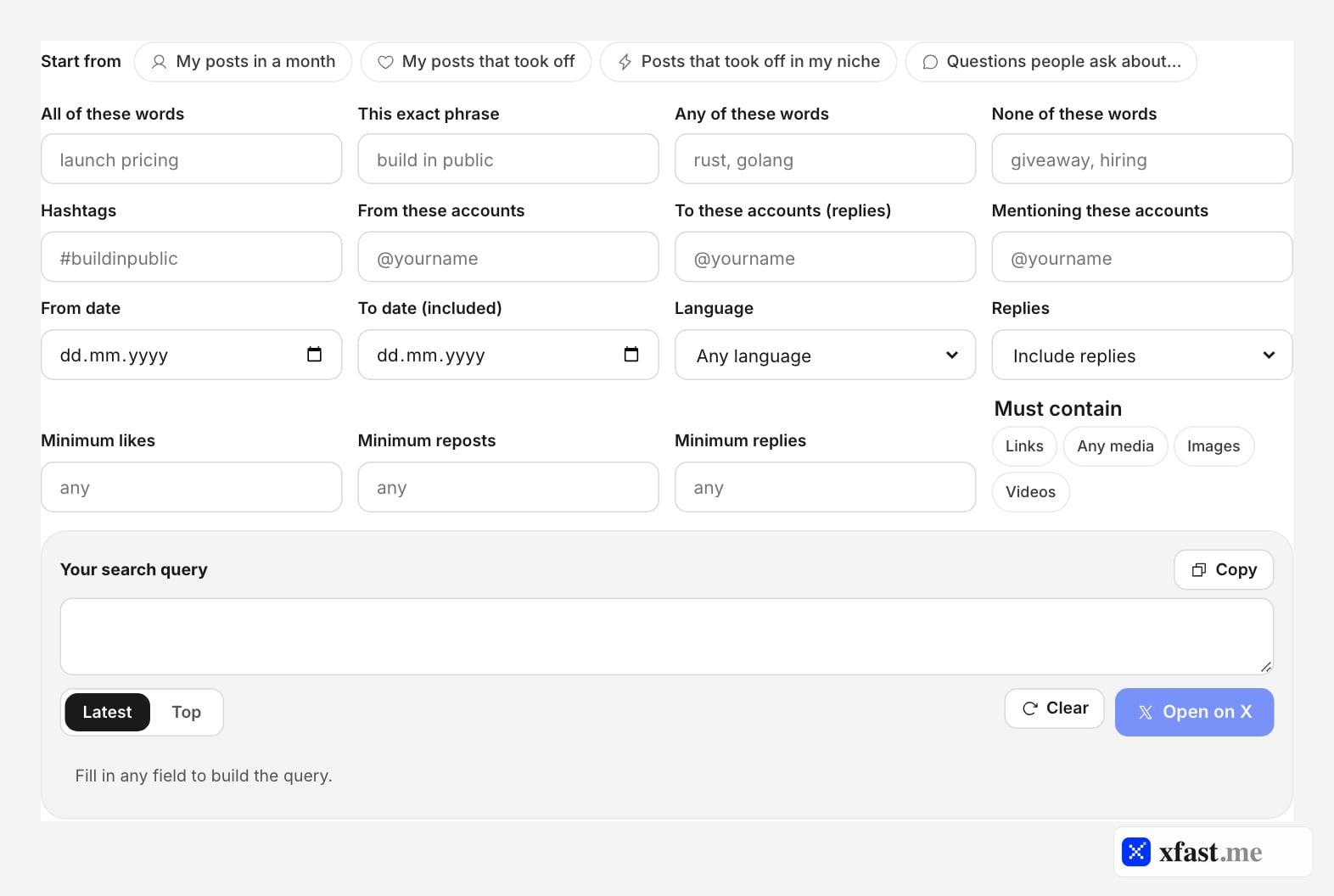
Several handles in one field become one group, so from:anna from:ben is written as (from:anna OR from:ben). A handle that X would not accept is skipped and the builder says which one.
Use it in three steps
- Start from a preset or leave the form empty, and fill in only what you know. One field is enough.
- Check the query under the form, then pick Latest to read the newest posts first or Top for the most liked.
- Press Open on X to run the search in a new tab, or Copy and paste the query into the search box of the app on your phone.
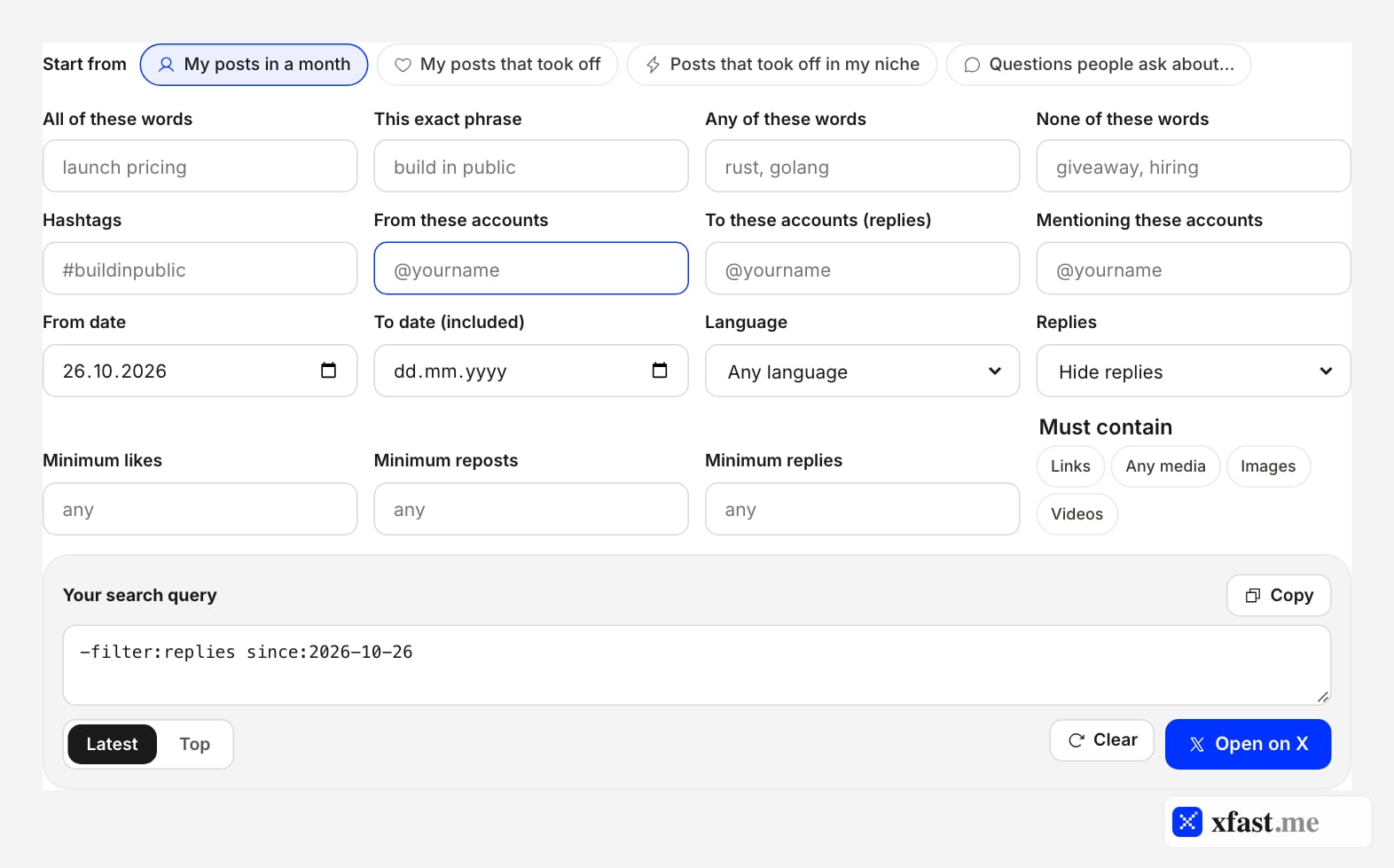
Three presets cover what most people search for first
My posts in a month fills your handle and the last 30 days and hides replies, so you see what you posted. Posts that took off in my niche takes your topic words and keeps only original posts with at least 500 likes, which shows the formats readers already reward. Questions people ask about a topic adds phrases such as how do and what is, and the result is a list of readers who are asking for an answer you can write.
Each preset only fills the form. Change any field afterward and the query follows.
A date range ends the day before the second date, so the builder moves it for you
On X, since: includes its day and until: leaves its day out, and both count in UTC. To get all of October you write until:2026-11-01. The builder takes the last day you want, adds one day and writes that. Posts from late evening in your time zone can land on the next UTC day, so widen the range by a day when a post is missing.
Use min_faves, since X search has no min_likes
The minimum likes operator in the search box is min_faves:. Reposts are min_retweets: and replies are min_replies:. When a search comes back empty or short, remove one operator at a time to find the one that cuts everything, and lower the minimums first. Old posts return fewer results than recent ones, so a narrow date range for a year ago can show only a part of what exists.
Find the posts worth replying to, then give them an early start
Searches for questions in your topic with a minimum of replies show conversations that are still open, and a thoughtful reply under them reaches people who do not follow you yet. For your own posts, free likes from real people in the first hour are what move them up in the feeds of others. To find a post you wrote long ago, read our guide on viewing old tweets on X, and use the post date finder to read the exact time of any link you get back.
Before you publish a reply, the character counter shows whether it fits.
 Boost X post free with likes, replies and bookmarks from real people in the first hourBoost X post free by getting likes, replies and bookmarks from real people in the first hour. See the steps and where mutual swaps already run.
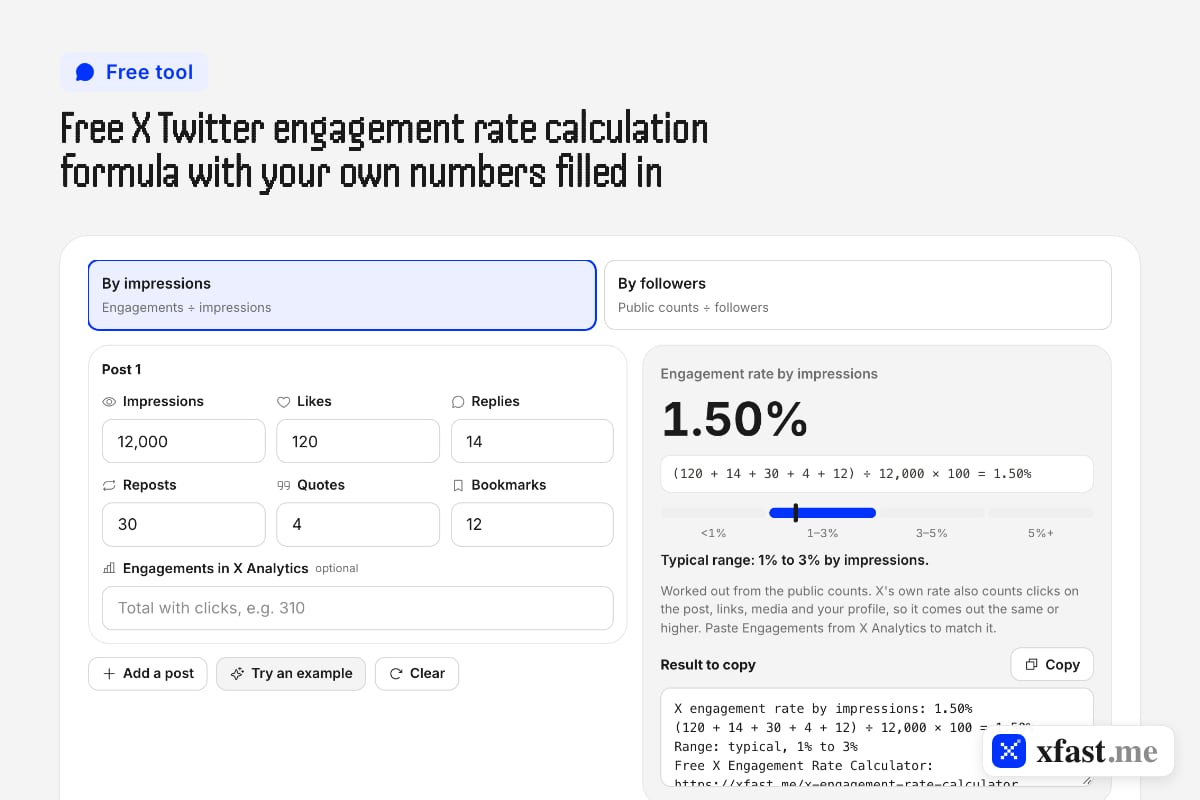 Free X Twitter engagement rate calculation formula with your own numbers filled inFree X Twitter engagement rate calculation formula as a calculator: by impressions or followers, one post or many, with your numbers in the formula.
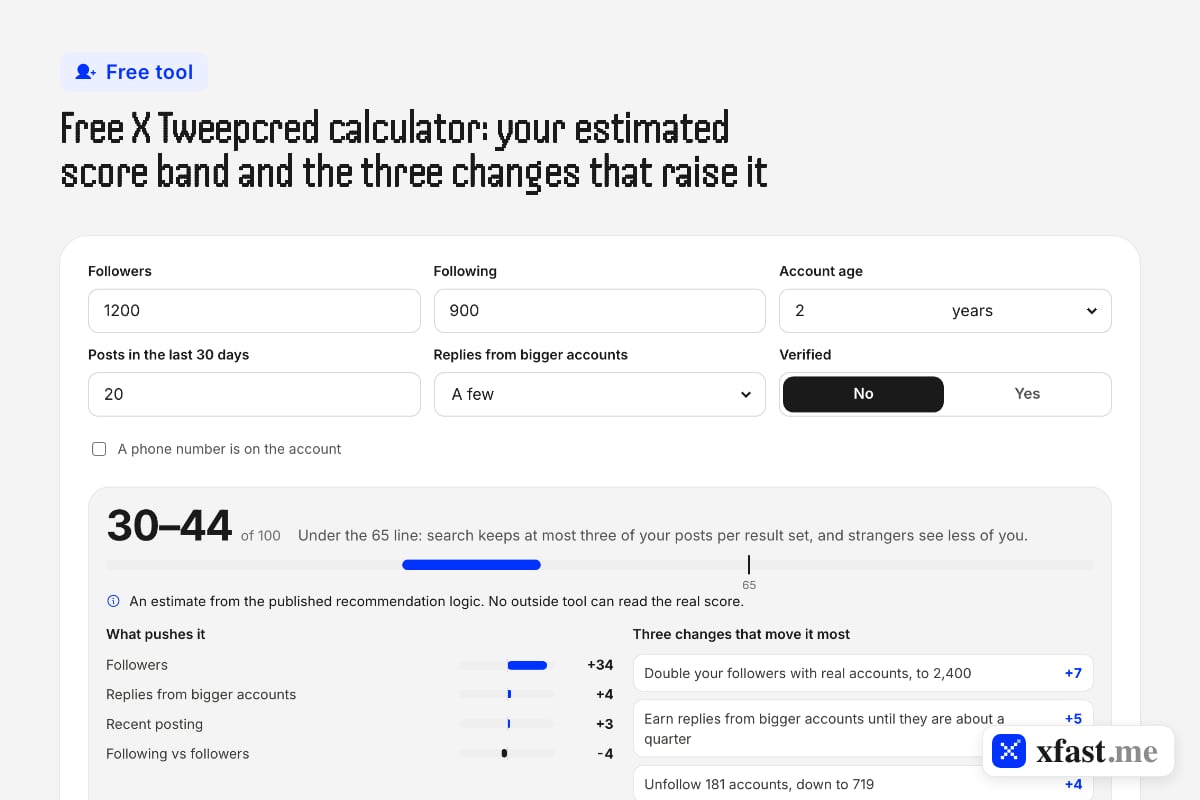 Free X Tweepcred calculator: your estimated score band and the three changes that raise itFree X Tweepcred calculator: type your followers, following and account age, get an estimated 0 to 100 score band and the three changes that raise it most.